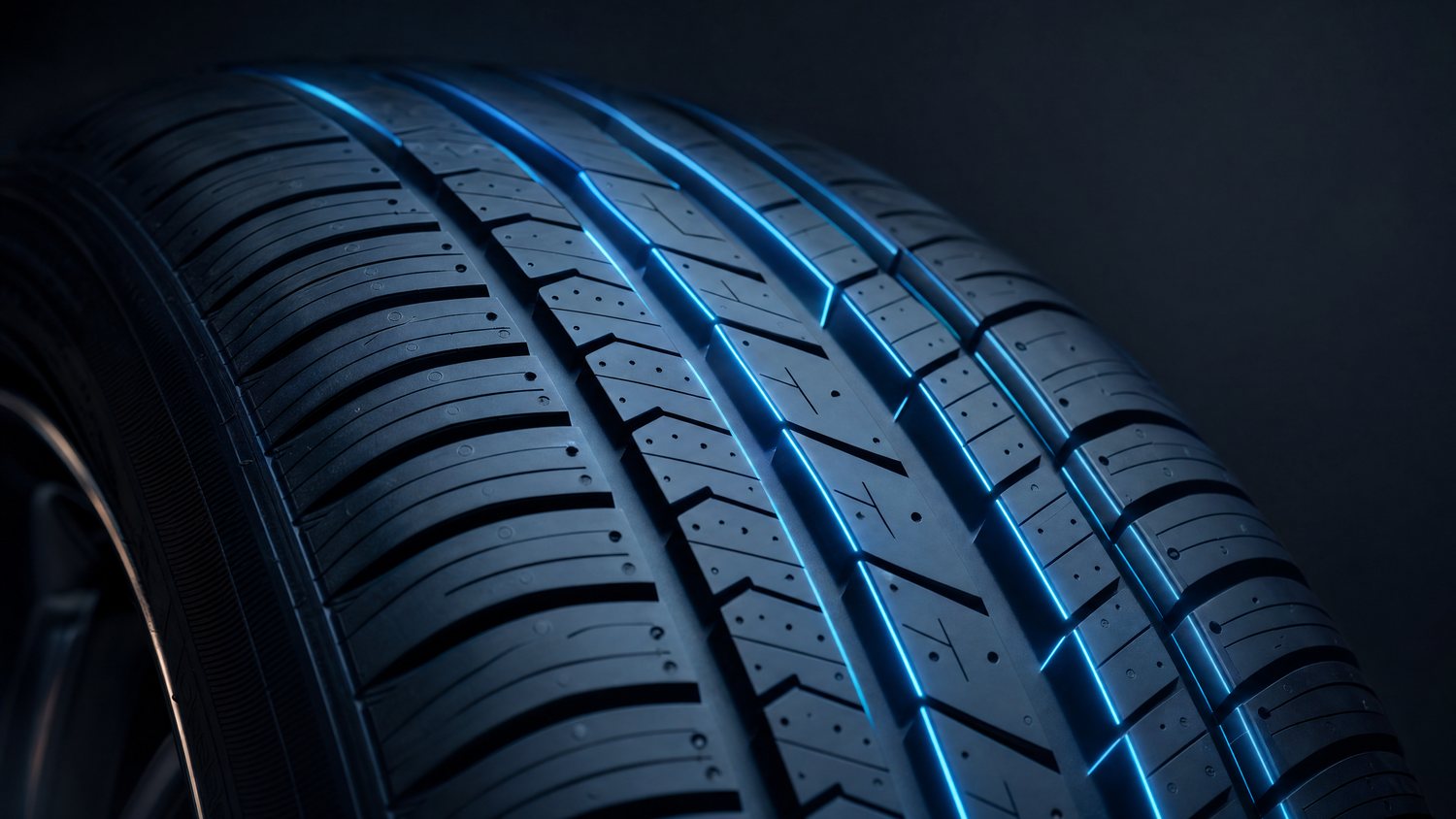
An EV tire isn't a passenger tire with a different label — the added weight of a battery pack, the instant torque of an electric motor and the complete absence of engine noise to mask road sound all change what the tire underneath actually needs to do.
Why EV tires carry different specs
Battery packs add several hundred kilograms to a vehicle's weight, which pushes EV-rated tires toward higher load indices than the combustion equivalent of the same body style. Instant torque from an electric motor accelerates tread wear on the drive axle faster than a comparable gas engine would, and with no engine noise to cover it, road and tire noise becomes far more noticeable to the driver — pushing manufacturers toward tread patterns engineered specifically for lower acoustic signature.
Rolling resistance is a range number, not a comfort number
Lower rolling-resistance compounds directly extend an EV's range per charge, which is why EV-specific tire lines increasingly use silica-heavy compounds and optimized tread geometry that a standard passenger tire doesn't need. For a distributor, this is genuine product differentiation — not a marketing label — that buyers increasingly ask for by name.
Where the growth actually is
EV-specific tire exports are growing faster than the conventional segment, and that gap is expected to widen as EV fleets scale in markets across Latin America, the Middle East and Southeast Asia — the same markets most wholesale tire distributors already serve. Stocking EV-compatible SKUs now is a forward position, not a reaction to current demand.
The technology shift is real and it's accelerating faster than most catalogs have updated for it — distributors who add EV-rated SKUs ahead of the demand curve are the ones positioned to capture it.