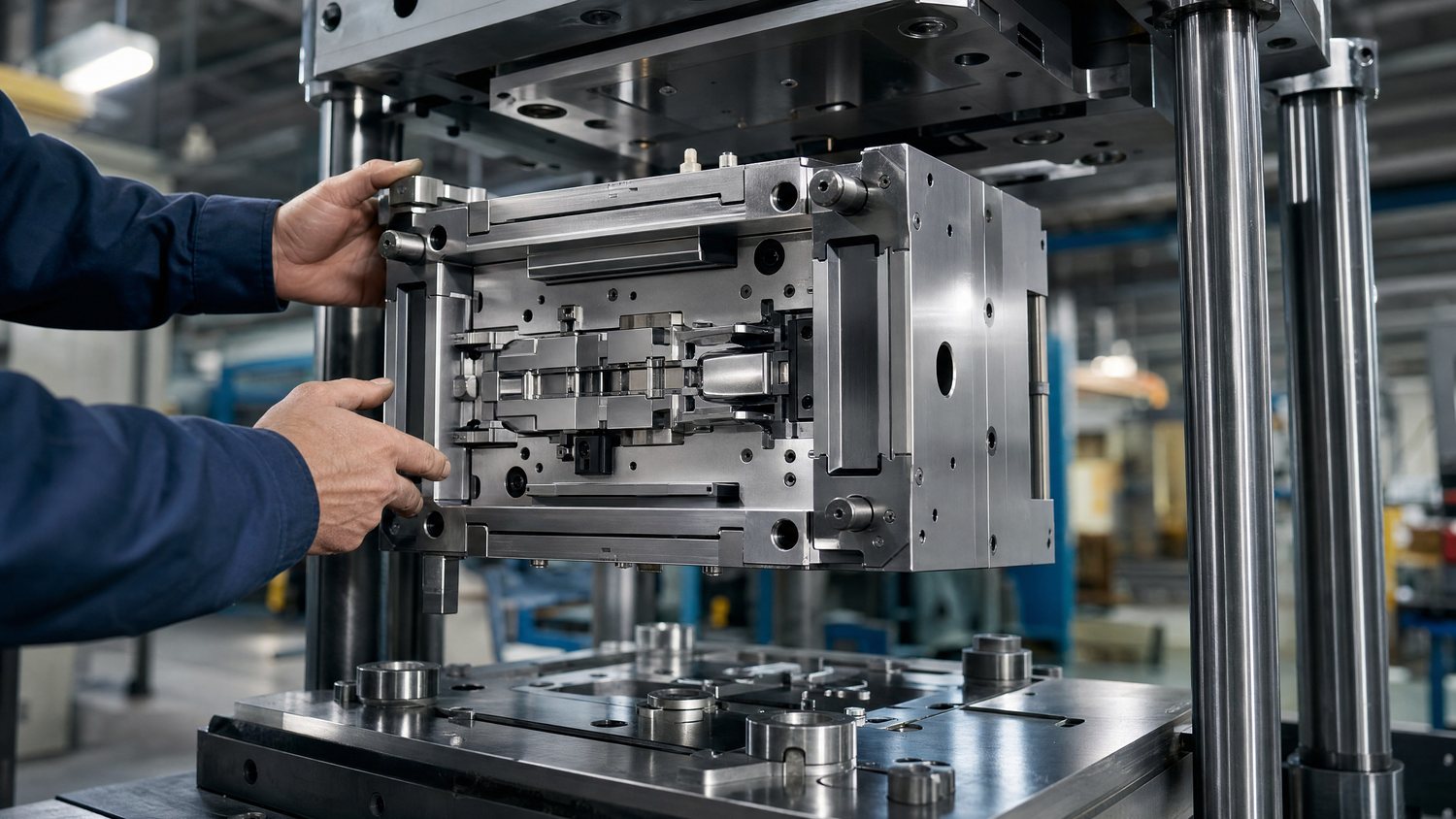
Before a single finished unit reaches a warehouse, a Chinese factory has already moved a product through tooling, raw-material sourcing, forming and multiple internal checkpoints — understanding that sequence is what lets a buyer ask useful questions instead of generic ones.
It starts with the mold, not the material
Tooling — the molds, dies or jigs that shape a product — is typically the largest fixed cost in bringing a new SKU to production, and it's amortized across the run, which is exactly why minimum order quantities exist: a factory needs enough units to justify the tooling outlay. A buyer negotiating MOQ without understanding this is negotiating against a cost structure they can't see.
Raw material sourcing sets the ceiling on quality
A factory's own supplier relationships for raw material — rubber compound, sheet metal, resin, whatever the category requires — determine the quality ceiling before a single unit is formed. This is the stage an initial production check is designed to catch: a factory substituting a cheaper input is doing it here, at the very start of the run, not at the end.
Forming, assembly and the checkpoints in between
The actual forming or assembly stage — molding, curing, machining, whatever applies to the category — runs through multiple in-line checkpoints in a well-run facility, each one catching drift before it compounds into a defective final unit. A factory that can describe these checkpoints specifically, rather than gesturing at "quality control" as one vague step, is a factory that actually has a process.
Understanding the sequence from mold to finished unit doesn't require a manufacturing degree — it requires asking a factory to walk through it specifically, and noticing when they can't.