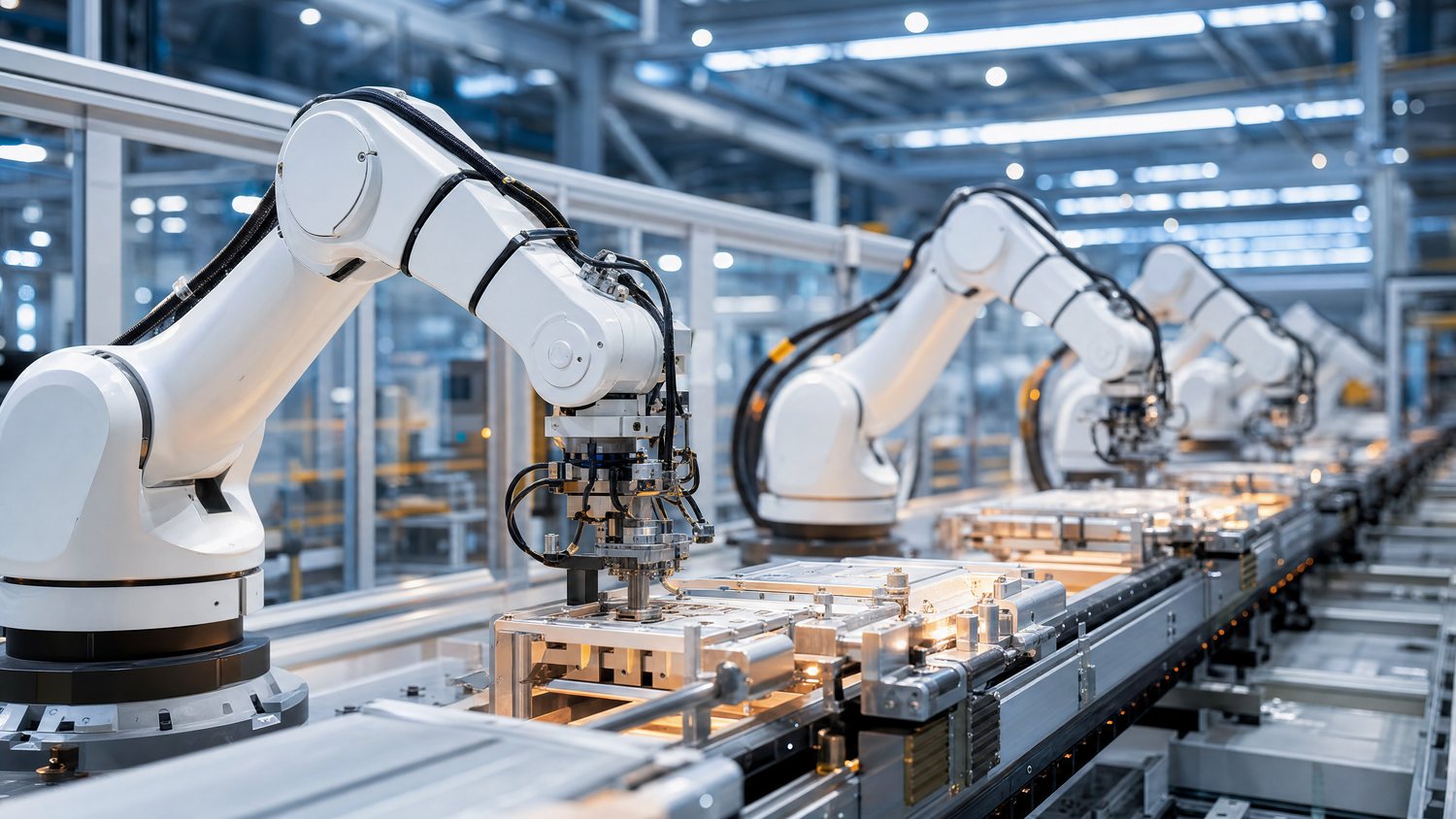
China produced more than 143,000 industrial robots in the first two months of 2026 alone — up 31% year on year. For a wholesale buyer sourcing anything from a factory floor, that number matters more than it sounds, because it changes what "on-time" and "consistent quality" actually mean.
The scale of the push
Government-backed plans target 10,000 smart factories and 100 "lighthouse" facilities nationwide by the end of 2026, and China now accounts for roughly 54% of all new industrial robot installations worldwide. The domestic factory-automation and industrial-controls market is on track to grow from about $118 billion in 2026 to over $175 billion by 2031.
What automation changes for a buyer, concretely
A production line with more sensors and fewer manual handoffs produces more consistent output between batch one and batch fifty — which is exactly the problem behind most AQL failures and returned shipments. Automated lines also generate the production data that makes a real-time quality dashboard possible, instead of relying on a factory's word that the line is running to spec.
The gap that still matters
Automation raises the ceiling on consistency, but it doesn't replace inspection — a smart factory with no independent oversight is still a factory nobody has verified. The buyers who benefit most are the ones pairing an automated, audited factory with their own inspection checkpoints, not swapping one for the other.
Smart manufacturing is real and accelerating in 2026, but for a wholesale importer it's a reason to raise expectations on consistency — not a reason to skip the inspection step that catches the exceptions.