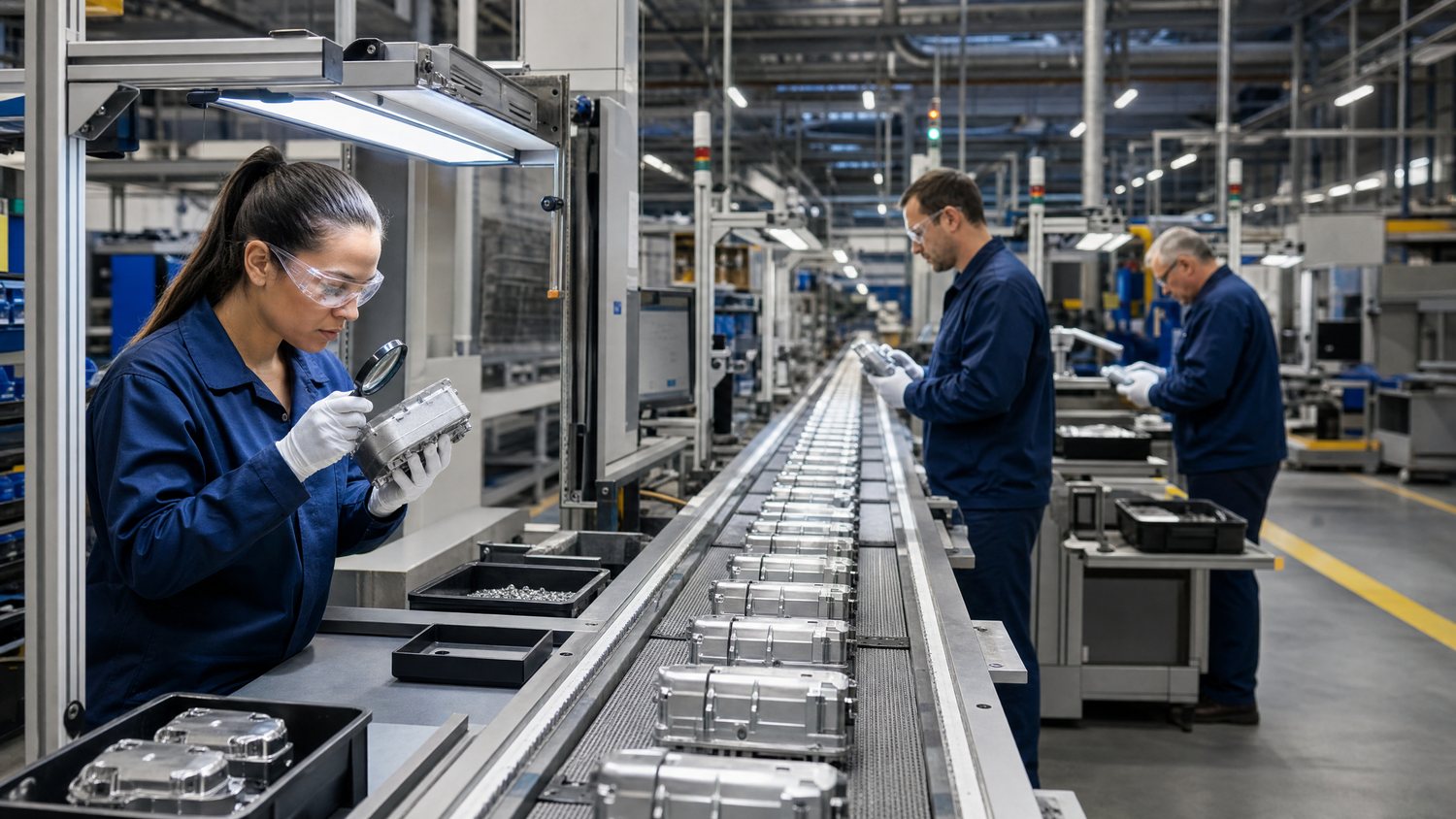
A single pre-shipment inspection catches defects in the finished batch. It doesn't catch a raw-material substitution made in week one, or a process drift that started after the sample was approved — for that, inspection has to happen more than once.
Stage one: initial production check
An initial production check (IPC), run shortly after production begins, verifies that the raw materials, components and early output actually match the approved sample and specification. Catching a substitution here — cheaper compound, wrong-gauge material — is the difference between a small correction and a rejected container three weeks later.
Stage two: during-production inspection
A during-production inspection (DPI), typically run when 20–50% of the order is complete, checks that the process is holding steady, not just that the first units were fine. This is the stage that catches problems the sample run never revealed — equipment wear, a shift-change quality gap, a subcontracted process quietly swapped in.
Stage three: final pre-shipment inspection
The final PSI, run once at least 80% of goods are manufactured and packed, applies AQL sampling under ISO 2859-1 as the last checkpoint before the container is sealed. By this stage, a well-run three-stage program has already caught most problems — the final inspection is confirmation, not discovery.
A single inspection is a snapshot. Three, spaced across the production run, is the difference between hoping the batch matched the sample and knowing it did.