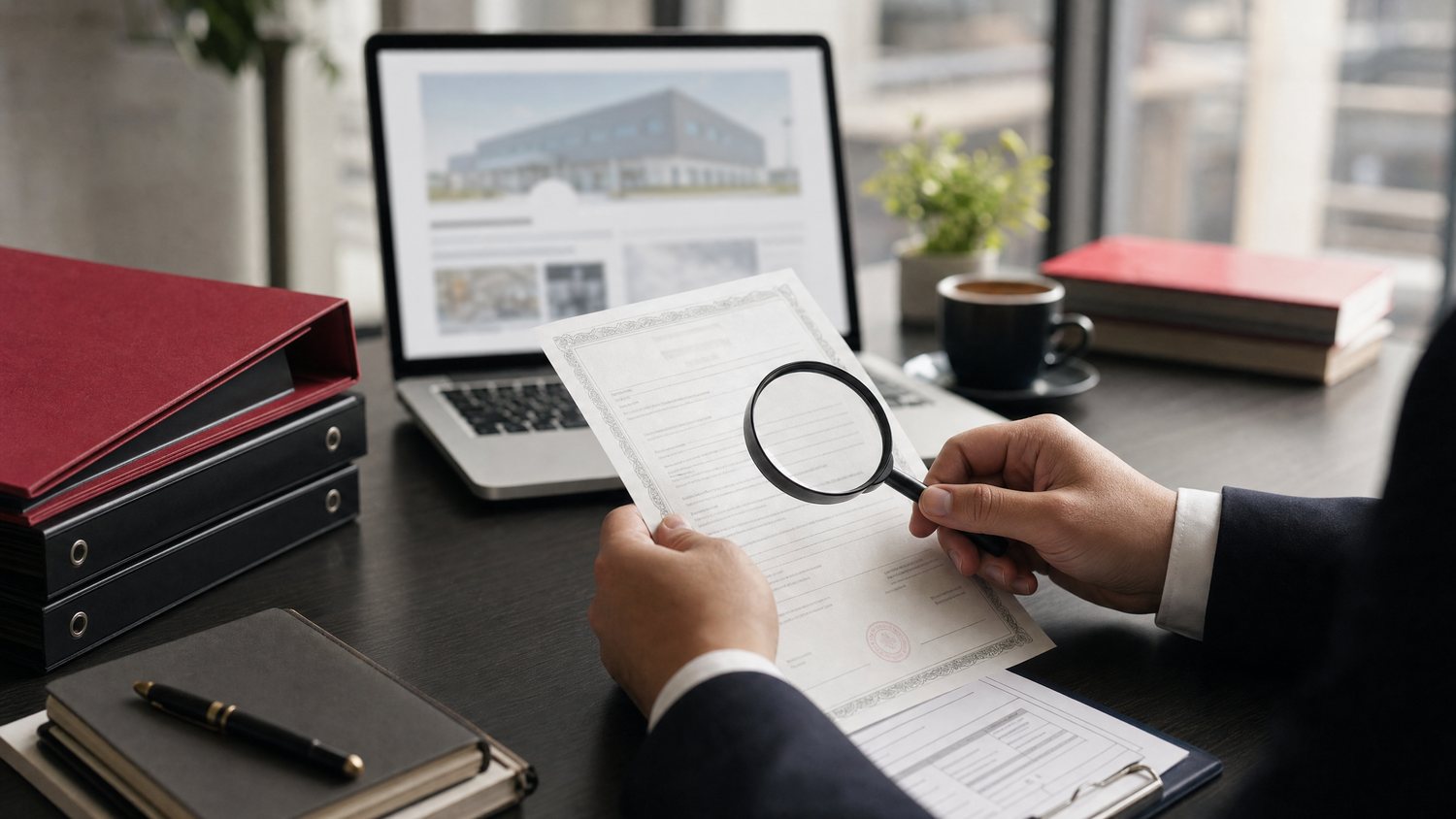
A deposit wired to an unverified factory is the single most common way first-time importers lose money in China — and it's also the easiest mistake to avoid, because every step of verification below happens before any money moves.
Start with the paper trail
Confirm the business license against China's national registry, and check that the registered scope of business actually covers what's being quoted — a trading company registered for general goods isn't the same as a licensed manufacturer. Cross-reference the export history: a factory with years of customs records shipping the same product category is a materially different risk than one with none.
Then go on-site — or send someone who will
A proper factory audit takes four to six hours and covers production capacity, equipment, quality-management documentation and the actual manufacturing process, not just a front-office tour. Independent audits typically run $450–$850 when purchased standalone; sourcing agents who handle this as part of a commission-based service fold it into a process that also covers negotiation and logistics. One industry report found buyers working with an agent who verifies suppliers this way cut defect rates by roughly 41% compared with those who skipped it.
What to lock in before the deposit
Order and test samples against the actual spec, confirm certifications relevant to the destination market, and put payment terms in writing — no legitimate factory requires 100% upfront, and a structured deposit, with the balance tied to a passed inspection, keeps leverage on the buyer's side through the entire order.
None of this is exotic due diligence — it's the standard sequence any serious sourcing partner runs before recommending a factory, and it's the same sequence we run before quoting a single wholesale order.